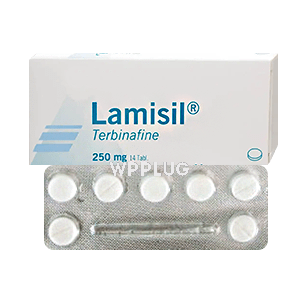
Lamisil
Lamisil: Clinically Proven Antifungal Treatment for Onychomycosis
Lamisil (terbinafine hydrochloride) is a leading oral and topical antifungal medication indicated for the treatment of dermatophyte infections. As a member of the allylamine class, it demonstrates potent fungicidal activity by inhibiting squalene epoxidase, a key enzyme in ergosterol biosynthesis. This mechanism disrupts fungal cell membrane integrity, resulting in effective eradication of susceptible organisms. Clinicians widely prescribe Lamisil for its established efficacy profile, favorable pharmacokinetics, and well-documented safety data across multiple patient populations.
Features
- Contains terbinafine hydrochloride as active ingredient
- Available in 250 mg oral tablets and 1% topical formulations (cream, spray, solution)
- Fungicidal rather than fungistatic mechanism of action
- Demonstrated bioavailability of approximately 70-80% when administered orally
- Topical formulations provide targeted delivery with minimal systemic absorption
- Stable at room temperature with two-year shelf life
Benefits
- Achieves complete mycological cure in majority of onychomycosis cases
- Prevents recurrence through complete fungal eradication
- Restores nail appearance and eliminates associated discomfort
- Reduces risk of secondary bacterial infections
- Minimizes transmission risk to household members
- Provides cost-effective treatment compared to long-term management approaches
Common use
Lamisil is primarily indicated for the treatment of dermatophytoses caused by susceptible organisms including Trichophyton species (T. rubrum, T. mentagrophytes, T. tonsurans), Microsporum canis, and Epidermophyton floccosum. The oral formulation is specifically approved for onychomycosis of the toenail or fingernail due to dermatophytes. Topical formulations are indicated for tinea pedis (athlete’s foot), tinea cruris (jock itch), and tinea corporis (ringworm). Off-label uses may include treatment of certain cutaneous candidiasis infections and pityriasis versicolor when standard therapies prove ineffective.
Dosage and direction
Oral Tablets:
- Adults: 250 mg once daily
- Toenail onychomycosis: 12 weeks continuous therapy
- Fingernail onychomycosis: 6 weeks continuous therapy
- Take with or without food; consistent administration recommended
Topical Formulations:
- Apply thin layer to affected area and surrounding skin once or twice daily
- Clean and dry area before application
- Wash hands after application unless treating hands
- Treatment duration typically 1-4 weeks depending on infection severity
- Continue treatment for 1-2 weeks after symptoms resolve to prevent recurrence
Dosage adjustment required in patients with renal impairment (creatinine clearance ≤50 mL/min) or hepatic impairment. Not recommended for patients with chronic or active liver disease.
Precautions
- Monitor liver function tests (ALT, AST) before treatment and periodically during therapy
- Perform complete blood count in patients receiving treatment longer than 6 weeks
- Use with caution in patients with pre-existing lupus erythematosus or psoriasis
- Topical application may cause skin irritation; discontinue if severe reaction occurs
- Avoid occlusive dressings unless directed by physician
- Oral formulation may cause taste disturbance that usually resolves upon discontinuation
- Photosensitivity reactions reported; advise sun protection during treatment
Contraindications
- Hypersensitivity to terbinafine or any component of the formulation
- Chronic or active liver disease
- Severe renal impairment (creatinine clearance <30 mL/min)
- History of drug-induced liver injury
- Pregnancy and breastfeeding (oral formulation)
- Concurrent use with specific CYP2D6 substrates with narrow therapeutic index
Possible side effect
Common (≥1/100):
- Headache
- Gastrointestinal disturbances (nausea, diarrhea, dyspepsia)
- Taste disturbance (dysgeusia)
- Skin rash and pruritus
- Topical: application site reactions (burning, irritation)
Uncommon (≥1/1000):
- Liver enzyme elevations
- Visual disturbances
- Dizziness
- Fatigue
- Arthralgia
- Myalgia
Rare (<1/1000):
- Severe skin reactions (Stevens-Johnson syndrome, toxic epidermal necrolysis)
- Hepatotoxicity
- Blood dyscrasias (neutropenia, thrombocytopenia)
- Panic attacks
- Depression
- Hearing loss
Drug interaction
- CYP2D6 inhibitors may increase terbinafine concentrations
- May decrease metabolism of CYP2D6 substrates (beta-blockers, SSRIs, TCAs, antiarrhythmics)
- Rifampin may decrease terbinafine concentrations by 100%
- Cimetidine may increase terbinafine concentrations by 33%
- May reduce efficacy of oral contraceptives (case reports)
- Potential interaction with warfarin (monitor INR)
- Avoid concurrent use with dextromethorphan
Missed dose
Take or apply the missed dose as soon as remembered. If it is almost time for the next dose, skip the missed dose and continue with regular schedule. Do not double the dose to make up for a missed dose. For topical formulations, maintain regular application schedule without increasing frequency.
Overdose
Oral overdose: May cause dizziness, nausea, vomiting, abdominal pain. No specific antidote exists. Employ supportive measures including gastric lavage if presented within 1 hour of ingestion. Activated charcoal may be beneficial. Monitor hepatic and renal function. Hemodialysis not expected to enhance elimination due to high protein binding.
Topical overdose: Unlikely to cause systemic effects due to minimal absorption. Wash affected area with soap and water. Symptomatic treatment if irritation occurs.
Storage
Store at room temperature (15-30°C/59-86°F). Keep container tightly closed. Protect from light and moisture. Do not freeze. Keep out of reach of children and pets. Do not use after expiration date. Do not transfer topical formulations to unlabeled containers.
Disclaimer
This information is for educational purposes only and does not constitute medical advice. Consult a healthcare professional for proper diagnosis and treatment. Individual results may vary. Full prescribing information available from product manufacturer. Report adverse events to appropriate regulatory authorities.
Reviews
Clinical studies demonstrate Lamisil achieves complete cure rates of 59-76% in toenail onychomycosis with mycological cure rates exceeding 70%. Dermatologists consistently rate terbinafine as first-line therapy due to superior efficacy compared to azole antifungals. Patient satisfaction surveys indicate high rates of treatment completion and improved quality of life measures. Long-term follow-up studies show sustained cure rates at 5 years post-treatment in 80% of patients who achieved initial cure.